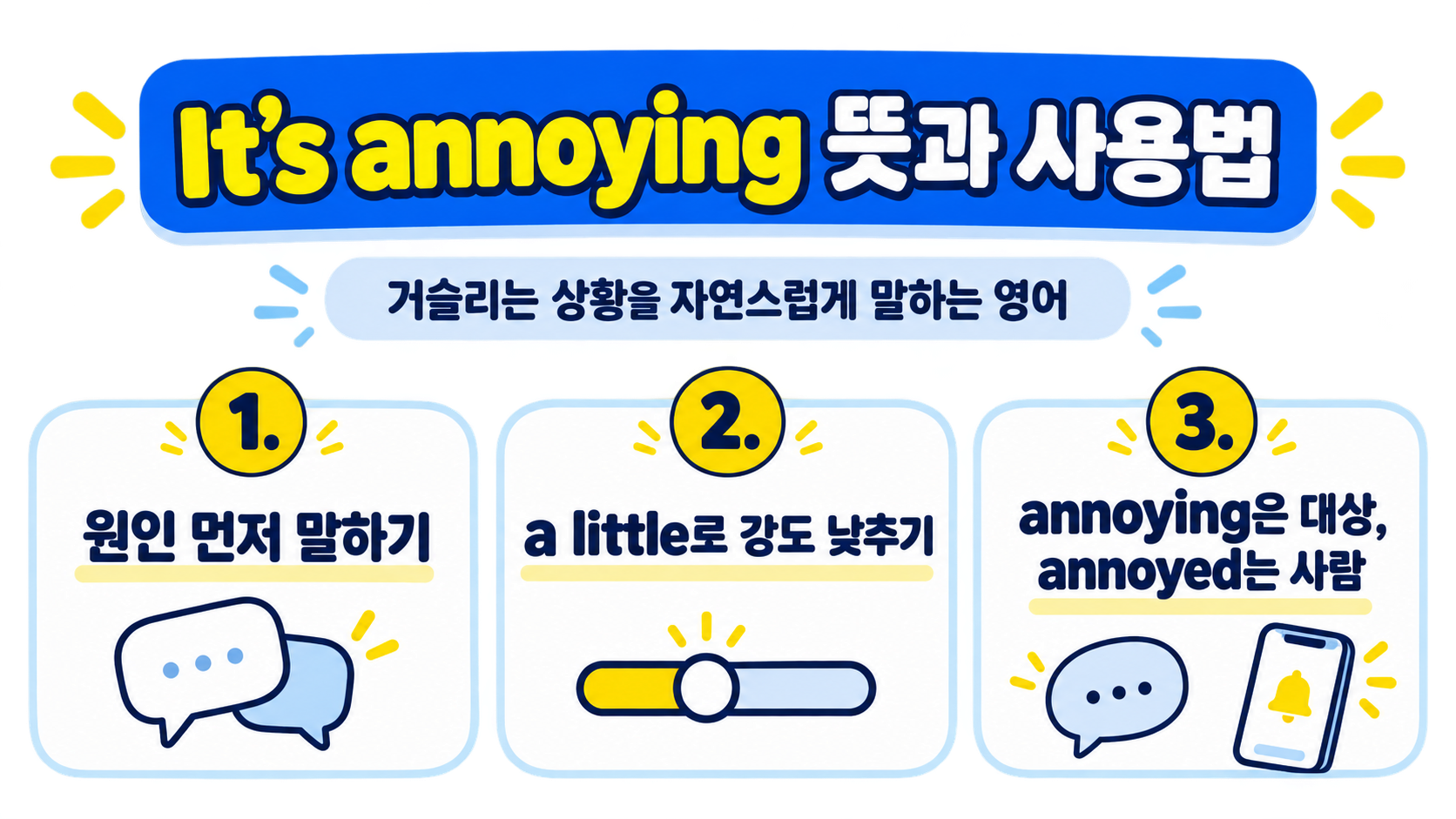
It's annoying의 핵심 뜻
It's annoying is a useful everyday phrase for a situation that causes mild irritation. It can describe a repeating sound, a slow connection, an unnecessary delay, or an alert that keeps returning. The phrase does not always mean anger. Often it simply signals that something is getting in the way of comfort, focus, or a smooth routine. Context and tone decide how strong the complaint sounds.
The usual forms are It is annoying, That is annoying, and the shorter conversational form It's annoying. Use it after you identify the problem. My phone keeps buzzing. It's annoying. This order makes the message clear because the listener hears the cause before the feeling. When the context is already obvious, That is annoying can react to news that someone has just shared.
상황별 말하기
Be careful when the subject is a person. He is annoying may sound like a judgment about the person as a whole. He keeps interrupting me. It's annoying focuses instead on a repeated action. This small change matters in friendships, classes, and workplaces. Describe the behavior, the effect, and then a possible request when you need a constructive conversation.
Add a little or kind of to make the complaint softer. This app is kind of annoying means the app is somewhat bothersome, not terrible. Add really or so when the feeling is stronger. This noise is really annoying shows clear frustration. Match the strength to the relationship and setting. A casual conversation with a close friend allows more direct language than a message to a customer or colleague.
비슷한 표현 비교
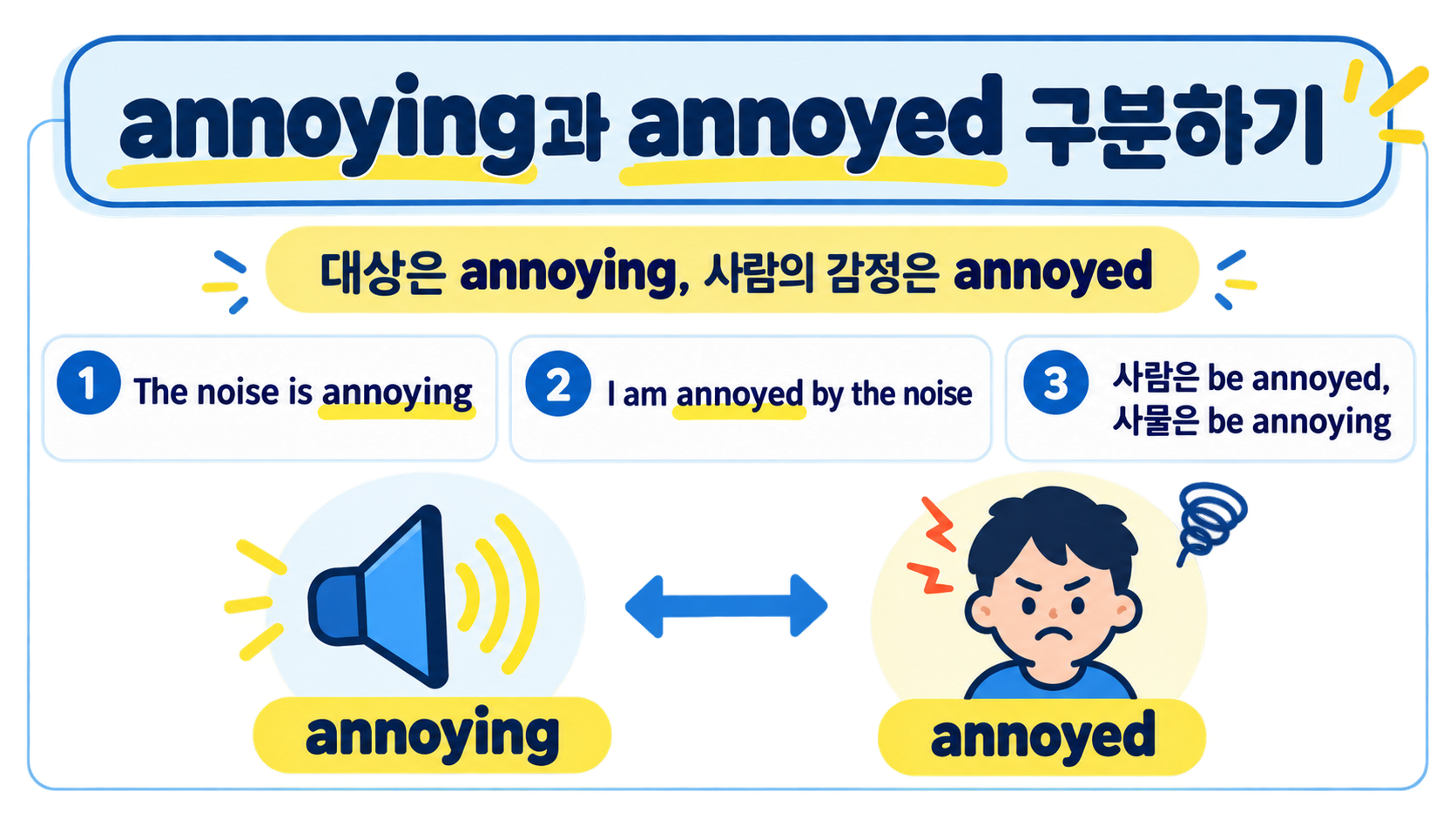
Annoying and annoyed have different jobs. Annoying describes the thing that creates irritation. Annoyed describes the person who feels it. The delay is annoying. I am annoyed by the delay. Remember the pattern by asking whether the sentence is about a cause or a feeling. This same distinction appears in other adjective pairs such as boring and bored, or confusing and confused.
Several nearby words have more specific meanings. Bothersome can sound slightly formal and often fits paperwork or an inconvenient process. Frustrating suggests that effort is blocked and a desired result is not arriving. Irritating often fits a continuing physical stimulus such as a noise or smell. Annoying remains the most flexible choice for everyday conversation because it is natural in many small situations.
실수 줄이는 체크리스트
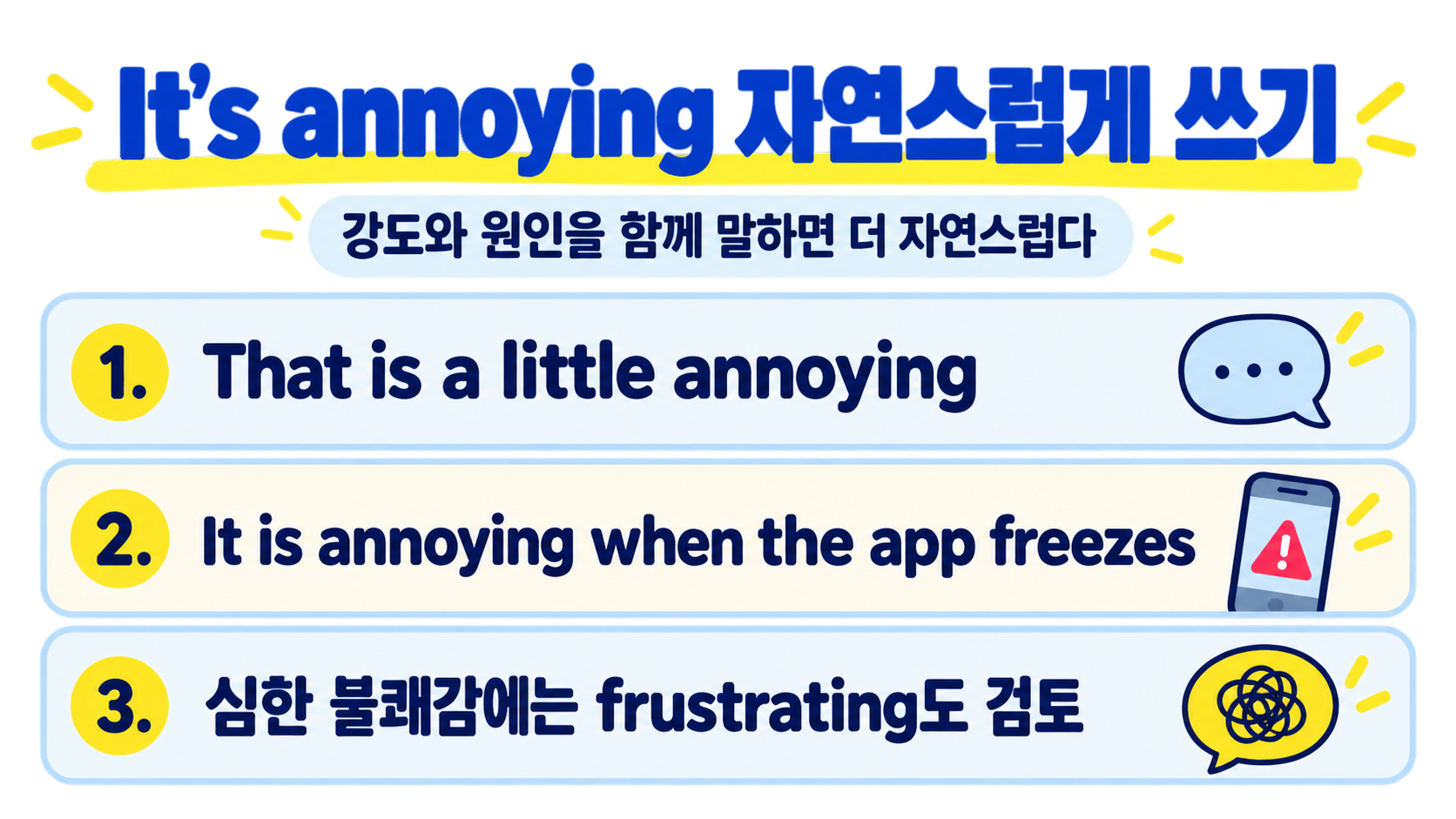
Practice with familiar examples. The bus is late again. It's annoying. These ads keep popping up. They are annoying. I find it annoying when people talk over others. Each example names an observable event before naming the reaction. Try replacing the noun with something from your own day, such as a password reset, a noisy notification, or a queue that stops moving.
A complaint becomes more helpful when it includes a request. The notifications are distracting. Could you turn them off? That is a bit annoying. Can we do it later? These sentences do not hide the problem, but they also give the other person a practical next step. In a work setting, say what is happening, explain the impact, and propose one reasonable adjustment.
It's annoying 뜻과 자연스러운 사용법 실수 줄이는 방법
The phrase also works for empathy. If a friend says a delivery is delayed, That sounds annoying recognizes the inconvenience without taking over the story. That must be annoying adds a gentle sense of understanding when you did not experience the problem yourself. After empathy, ask whether the person wants help, information, or simply someone to listen.
Before using the phrase, check four points. First, identify the actual source of the irritation. Second, avoid labeling a person when you mean their behavior. Third, choose a soft or strong modifier that fits the relationship. Fourth, add a clear request if you want a change. With these habits, It's annoying becomes an honest but respectful tool for daily English communication.